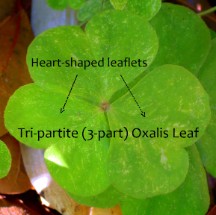
 |
Oxalis Wood Sorrel Oxalis species are small, lovely, edible plants. They have a sour lemony flavor caused by the presence of oxalic acid. Below is a slideshow illustrating the characteristics of the oxalis or wood sorrel family. Click on the photos (not the tiny thumbnails) to see the notes for each image. Types of Wood Sorrel 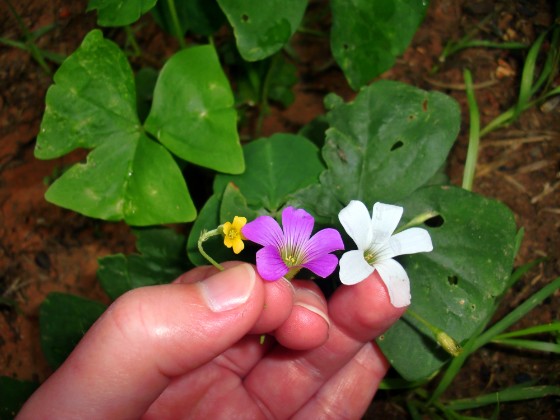 Flowers of (left to right) yellow wood sorrel, violet wood sorrel, and a white-flowered, straight-leaved species (its leaves pictured in background). 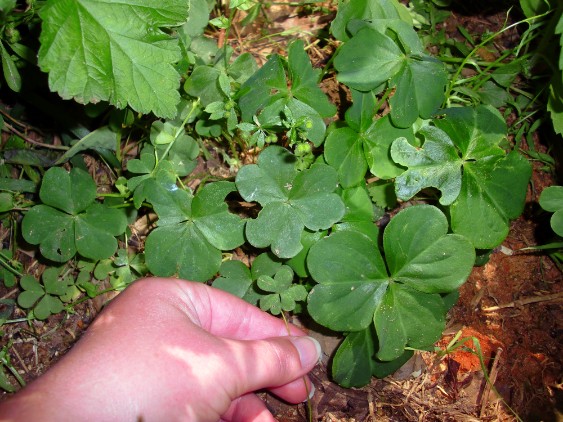 There is a wide range of leaf sizes between species and even on a single plant. 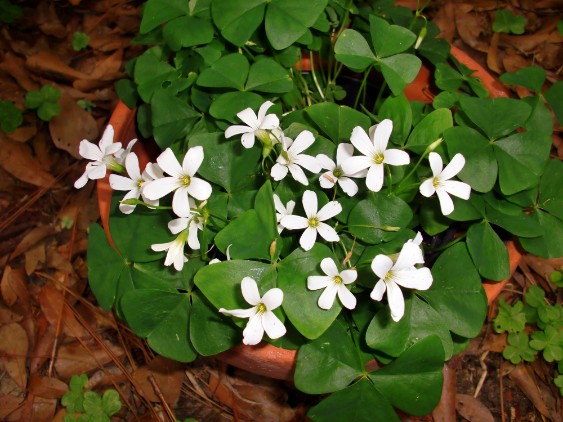 A straight-leaved species of Oxalis. The indentations are still there, but not to the extent of a heart shape. 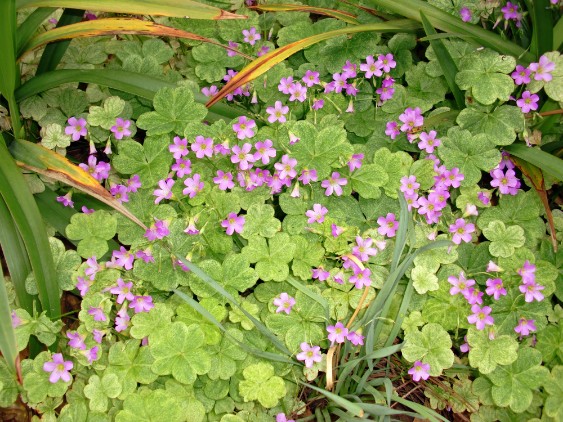 Violet wood sorrel spreads along the ground to fill flower beds and other areas. Here the spotting on the leaves probably indicates that these leaves are on their way out. After a springtime of crazy growth, they are worn and will soon die. 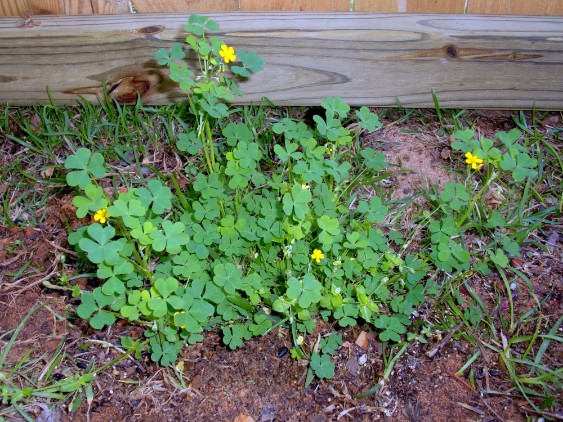 Other species are inclined to grow in a more upwards fashion, concentrating as much or more on reaching high as on spreading out. Harvesting To Find: Oxalis is a common "weed" in Baldwin County. It likes moist ground and shade. I recommend that you transplant some and start your own wood sorrel garden! 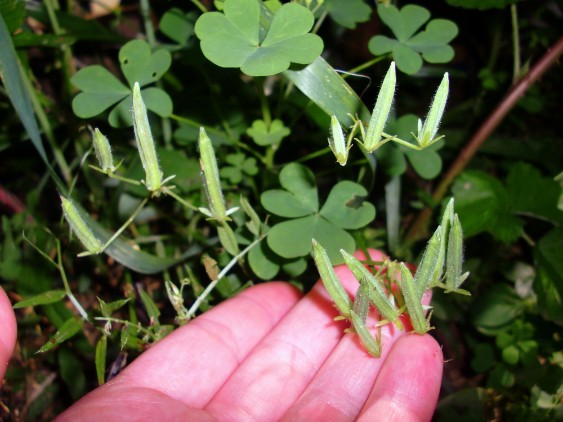 The flowers and seed pods, like the leaves, typically form in groups of three. The pods are the most flavorful part of the plant, boasting a sour lemony flavor. They can be picked and eaten raw, added to soups and pasta, etc. I recommend that you rinse them in cool water and use them as soon as possible.  This is a REALLY good harvest! All of these pods came from a single plant, and there were even more that were too small to pick. (Avoid harvesting pods that are small and not yet fully developed. You get less bang for your buck, and if you leave it alone it will grow bigger.) 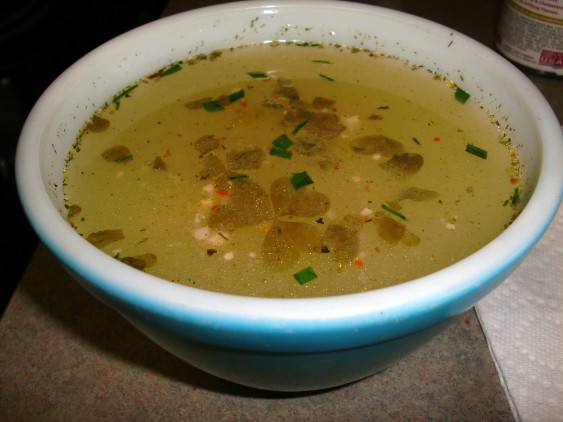 Just about any recipe can be enhanced with the addition of a few green hearts (oxalis leaves). To learn more about culinary uses of Oxalis, see the Wildcraft Soup page. |

